
Dental Implants in Kathmandu
Replace missing teeth with a fixed, natural-looking solution planned around your gum and bone health. At Gums & Giggles, implant treatment is led by Dr. Niyukty Arjal, MDS Periodontist, with transparent timelines, calm appointments, and honest advice from day one.
Understanding Implants
What Is a Dental Implant?
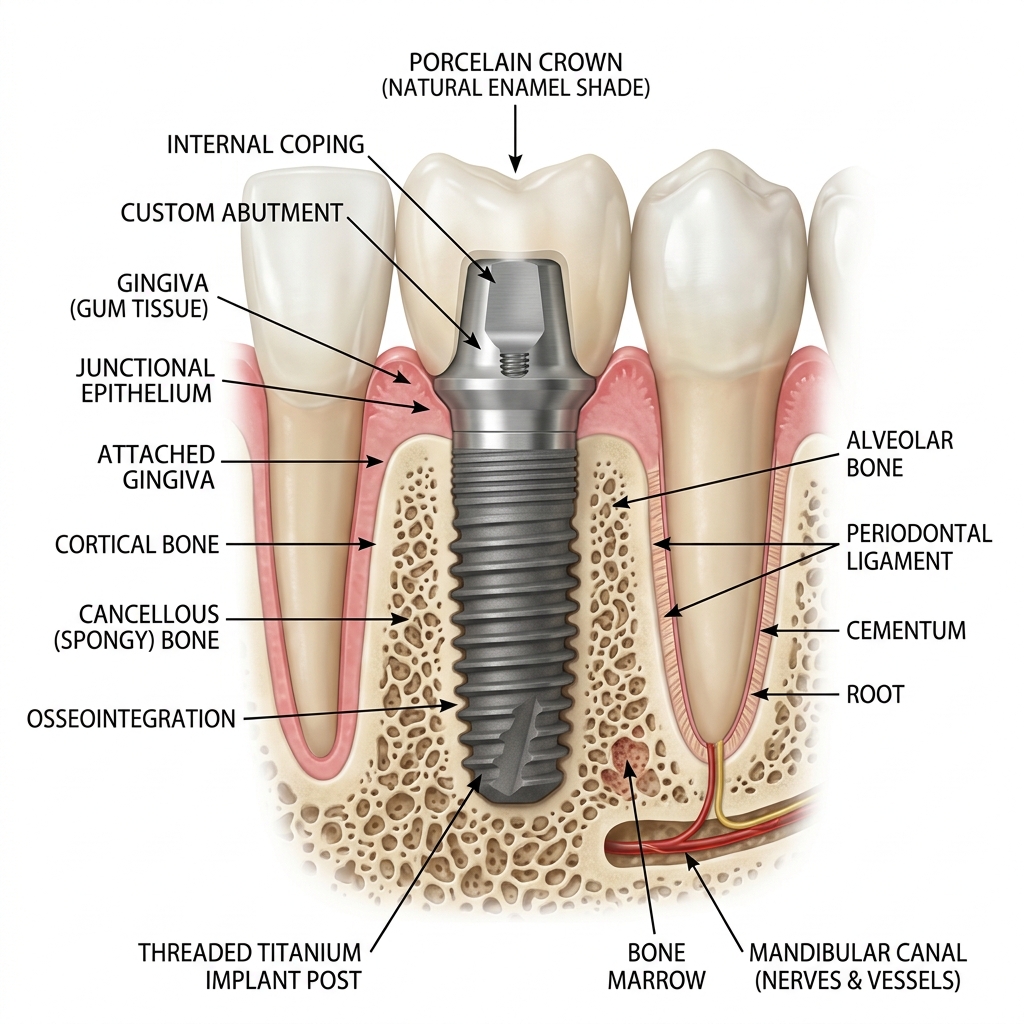
A dental implant is a small titanium post placed into the jawbone to replace the root of a missing tooth. Once it heals and bonds with the bone, a custom crown is fitted on top so the restored tooth looks and functions like a natural one.
Unlike dentures, implants do not move while you speak or eat. Unlike bridges, they do not require trimming healthy neighbouring teeth. For many patients, that makes implants the most complete long-term replacement option.
Implants also help preserve your jawbone. When a tooth is missing for a long time, the underlying bone can slowly shrink. Replacing the root helps maintain support for your bite and facial structure.
- Fixed, non-removable tooth replacement
- Natural-looking crown on top
- Helps preserve jawbone
- No filing of adjacent teeth
- Strong chewing function
- Long-term solution for missing teeth
Candidate Check
Who Is Usually a Good Candidate for Implants?
Most adults with missing teeth can be assessed for implants, but the right plan depends on bone support, gum health, and overall medical history.
One or more missing teeth
If you want a fixed replacement instead of a removable denture, implants may be the most suitable option.
Healthy gums or treatable gum issues
Active gum disease needs to be stabilised first, which is where periodontist-led care becomes especially valuable.
Adequate bone support
Even if you have some bone loss, many cases can still move forward after grafting or staged treatment.
Stable overall health
Smoking, uncontrolled diabetes, or certain medical conditions do not always rule implants out, but they do require careful planning.
Adults of many ages
There is no strict upper age limit. What matters more is oral health, healing ability, and the clinical condition of the site.
Ready for a staged process
Implants are not instant in every case. The best results come from careful sequencing, healing, and review before the final crown.
Treatment Journey
How the Implant Process Works
We break the treatment into clear stages so you always know what comes next and why.
Consultation
We examine your teeth, gums, bite, and X-rays to see whether the site is ready for an implant.
Planning
If gum treatment or bone grafting is needed first, we map that out before moving to placement.
Placement
The implant post is placed under local anaesthesia in a controlled, comfortable appointment.
Healing
Over the next few months, the implant bonds with the jawbone through osseointegration.
Final Crown
Once healing is confirmed, we attach a custom crown matched to your surrounding teeth.
Real Outcome
What Changes After a Missing Tooth Is Restored?
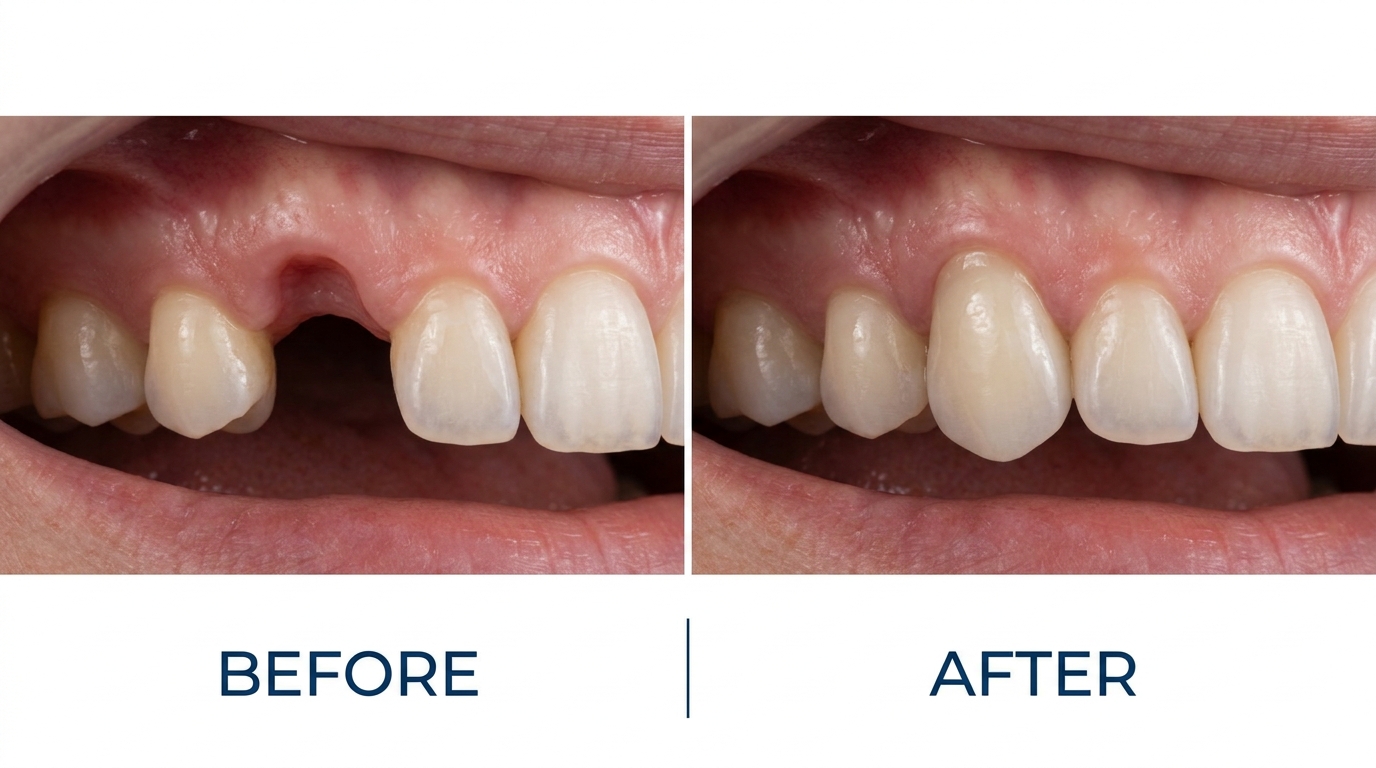
Implant treatment is not just about closing a visible gap. Patients usually notice more confident smiling, improved chewing comfort, and a more stable bite once the tooth is restored properly.
The before-and-after improvement is often subtle in the best way: the final tooth blends into the rest of the smile rather than looking like a separate dental work piece.
If your missing tooth has been affecting confidence, speech, or the way you chew on one side, a consultation can clarify what is realistically possible in your case.
Treatment Options
Dental Implants vs Bridges vs Dentures
Each option has a place, but implants stand out when long-term stability and bone preservation matter most.
| Feature | Implant | Bridge | Denture |
|---|---|---|---|
| Preserves jawbone | Yes | No | No |
| Requires support from adjacent teeth | No | Yes | Sometimes |
| Feels fixed during chewing | Yes | Yes | Less stable |
| Cleaning routine | Brush and floss normally | Needs special flossing care | Remove and clean separately |
| Typical lifespan | 15 to 25+ years | 10 to 15 years | 5 to 10 years |
The best choice depends on bone support, surrounding teeth, budget, and your long-term goals.
Pricing
How Much Do Dental Implants Cost in Kathmandu?
We prefer giving a clear itemised quote after assessment, but this table gives you a realistic starting range.
| Treatment Item | Estimated Range |
|---|---|
| Single dental implant with crown | NPR 1,00,000 to 1,50,000 |
| Consultation and clinical assessment | Quoted at visit |
| Bone grafting or preparatory procedures | Depends on complexity |
| Follow-up and review planning | Included in treatment flow |
Final pricing depends on bone condition, crown material, implant site, and whether supporting treatment is required first.
Why Gums & Giggles
Why Patients Choose Us for Implant Treatment
Implants depend on diagnosis and planning as much as the procedure itself, which is why specialist oversight matters.
Periodontist-led planning
Dr. Niyukty Arjal specialises in the gums and bone that support implants, which is a real advantage in straightforward and complex cases alike.
Clear diagnostics before treatment
We assess bone support, gum condition, and overall site quality before recommending a route forward, so treatment decisions stay grounded in reality.
Bone-loss cases welcomed
If your missing tooth has been gone for a long time, that does not automatically exclude you. We can assess whether grafting or staged care is appropriate.
Honest communication
We explain candidacy, timelines, costs, and alternatives clearly instead of pushing one solution for everyone.
Structured follow-up care
Implants succeed best when healing is reviewed properly. We monitor recovery and only move to the final stage when the foundation is ready.
Trusted local reputation
Patients from across Kathmandu Valley choose us for specialist care delivered in a warm, calm, appointment-based clinic environment.

Dr. Niyukty Arjal
Implant dentistry depends heavily on the quality of the gums and supporting bone. Dr. Arjal’s periodontology background means she evaluates those foundations first, which is especially important in patients with bone loss, gum history, or complex missing-tooth sites.
That specialist perspective helps us decide not only whether an implant is possible, but how to stage the treatment safely and predictably for a long-lasting result.
Long-Term Care
How to Help Your Implant Last Longer
The implant itself is strong, but the surrounding gum and bone still need regular care to stay healthy.
Brush gently but thoroughly
Keep the implant crown and gumline clean with a soft-bristled brush twice a day.
Clean between teeth daily
Floss or use interdental aids so plaque does not accumulate around the implant site.
Attend review visits
Regular check-ups help catch bite pressure or gum issues early before they threaten implant stability.
Results Snapshot
Implant Treatment in Numbers
These quick stats summarise why implants are such a strong long-term option for the right patient.
FAQ
Frequently Asked Questions About Dental Implants
These are the questions patients usually ask before booking an implant consultation in Kathmandu.
How much do dental implants cost in Kathmandu?
Is the implant procedure painful?
How long does the full process take?
Can I still get implants if I have bone loss?
Are implants better than bridges or dentures?
Visit Us
Find Gums & Giggles in Kathmandu
Our clinic on Dhobidhara Marg is easy to reach from central Kathmandu and nearby residential areas.
Clinic Details
Patients often visit us from:
Ready to Replace Your Missing Tooth for Good?
Book an implant consultation with Dr. Niyukty Arjal and get a clear assessment of your bone support, treatment timeline, and exact options without pressure.
Book Your Consultation